
colibr.org
Home Blog

Rethinking Butter Chicken: From Skeptic to Believer

Butter chicken has long been treated as the culinary comfort blanket of Indian cuisine. It’s the dish you order when you’re unsure what else to try, the creamy, tomato-laced fallback that rarely offends and always satisfies. In a way, it holds the same place on an Indian menu that pizza occupies in American life: even when it’s just okay, it still hits the spot.

For a long time, I thought of butter chicken in exactly those terms—pleasant, predictable, and a little too safe. I grew up in New Delhi, where butter chicken was everywhere, and I mean everywhere. It was the go-to order for expats and picky eaters, a gateway dish for people too hesitant to dive into the bold spices and assertive flavors of the subcontinent’s richer culinary canon. In my mind, it was the chicken fingers of Indian cuisine—reliable, familiar, and a bit dull.

But it turns out, I was wrong. Deeply, deliciously wrong.

A Second Look at a Beloved Classic

The turning point came when I stumbled upon an Instant Pot butter chicken recipe on Two Sleevers, the wildly popular blog run by Dr. Urvashi Pitre. The dish had caught the attention of The New Yorker, and something about its widespread acclaim made me curious. I decided to try it—half out of professional interest, half to see what all the fuss was about.

That night, I made the dish, pressure-cooked to creamy, savory perfection, and served it to my wife. She’s no stranger to Indian food—at least, the version of it that exists in our kitchen—but she was floored. “Why haven’t you made this before?” she asked, fork poised mid-air.

I muttered something about how “it’s not really Indian food,” already regretting the words. The question lingered: What makes a dish authentically Indian, anyway? And why had I so casually written off something loved by millions, including a large swath of Indians both in the country and across the diaspora?

Good Is Good—And That’s Enough

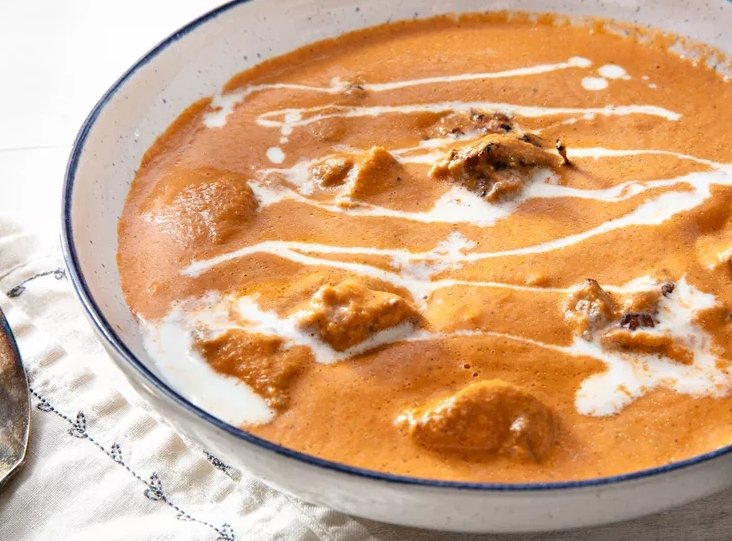
What I realized, finally, is this: butter chicken isn’t popular because it’s a diluted version of something else. It’s popular because it’s good. Very good, in fact. You don’t need to be a culinary anthropologist to understand why: tender chunks of chicken bathed in a lush, tangy tomato sauce, mellowed with cream and a generous amount of butter. It’s spiced, but not aggressively so. Rich, but not heavy. There’s a softness to it that’s universally appealing.

There’s a reason butter chicken (or murgh makhani, as it’s called in Hindi) continues to be a mainstay at Indian restaurants worldwide: it rarely disappoints. It’s forgiving to make, adaptable to personal preferences, and almost impossible to mess up—qualities that endear it to home cooks and seasoned chefs alike.

Memory, Flavor, and the Real Deal

Still, something about the pressure-cooked version didn’t quite match what I remembered from my childhood. Taste memories can be slippery—shaped by time, place, and emotion—but I felt sure the butter chicken of my youth had something this one didn’t.

Specifically, it was missing the earthy bitterness of dried fenugreek (known as kasuri methi) and the deep, almost smoky aroma of brown cardamom. Those two ingredients, in my mind, are part of butter chicken’s soul, the subtle but essential layers that give it dimension beyond cream and tomatoes.

So I set about tweaking the recipe. A pinch of fenugreek here, a cracked brown cardamom pod there. The changes were minor, but the result? Transformative. Suddenly, I wasn’t just eating a good version of a classic—I was transported. Back to crowded Delhi restaurants, to metal plates and butter-soaked naan, to the version of butter chicken that lived in my muscle memory. That’s when I knew: this dish had always been worth taking seriously.

Not Just a Crowd-Pleaser

Butter chicken is often boxed into a narrow category—comfort food, beginner-friendly, non-threatening. But that sells it short. At its best, it’s a showcase of balance: richness tempered by acidity, heat offset by sweetness, fragrance that lingers but doesn’t overwhelm. It’s a master class in what Indian cooking does best—layering flavor, respecting technique, and feeding the soul.

And, importantly, it’s not a relic. Butter chicken continues to evolve in home kitchens and restaurants alike. Pressure cookers, slow cookers, stovetop versions—there’s a version for every kind of cook. But as long as the heart of the dish remains intact, as long as someone is pouring a little extra cream at the end and swiping up sauce with torn bread, it’s still butter chicken.

Final Thoughts: From Cynic to Champion

My relationship with butter chicken has changed. I used to see it as a culinary compromise, a dish that played it too safe. Now, I see it for what it is: a dish that unites. It’s a staple on wedding menus and takeout counters alike. It’s the dish a first-time visitor to India might fall in love with—and one that even a homesick Delhiite abroad might crave after months away.

So go ahead, embrace butter chicken without irony or apology. Serve it to skeptics and food snobs and spice fiends alike. Add your fenugreek, adjust the cream, make it your own. Just don’t underestimate it.

Because butter chicken, like pizza or grilled cheese, proves one delicious truth: food doesn’t need to be complicated to be profound. Sometimes, it just needs to be good.


The British and Their Sweets: A Love Story of Comfort and Tradition

The British have an enduring love affair with sweets—a relationship that transcends mere indulgence and delves deep into the realms of comfort, tradition, and identity. It’s not just about satisfying a sweet tooth; it’s about embracing a cultural heritage that finds solace in the simple pleasures of life.

At the heart of this affection lies the quintessential British ritual: tea time. This daily affair isn’t complete without a selection of biscuits, scones, or cakes, each offering a taste of nostalgia and warmth. The act of dunking a biscuit into a steaming cup of tea isn’t merely a snack; it’s a moment of pause, a brief respite from the hustle and bustle of daily life.

But what truly sets British sweets apart is their reliance on dried fruits. While other cultures may favor fresh fruits or exotic ingredients, the British have long turned to dried fruits like sultanas, currants, and figs to infuse their desserts with rich flavors and textures.

Take, for instance, the beloved scone. This humble baked good, often studded with sultanas or currants, is a staple at afternoon teas across the nation. The debate over whether to pronounce it “scone” (rhyming with “own”) or “scone” (rhyming with “gone”) is a testament to its deep-rooted place in British culture. Regardless of pronunciation, the scone remains a cherished treat, especially when served with clotted cream and jam.

Similarly, the lardy cake—a sweet, fruit-laden bread made with lard—offers a glimpse into the resourcefulness of past generations. Originating from times when meat fats were more prevalent, this cake combines dried fruits with a rich, buttery base, resulting in a dessert that’s both hearty and satisfying.

Regional specialties further highlight the British penchant for dried fruits. The Welsh bara brith, a tea-infused fruit bread, the Scottish Selkirk bannock, and the Irish barmbrack all showcase the versatility of dried fruits in baking. Each region has its own interpretation, but the common thread remains the inclusion of dried fruits, which add depth and sweetness to these traditional loaves.

Even in the realm of biscuits, dried fruits make their presence felt. The Garibaldi biscuit, often referred to as the “squashed fly” biscuit due to its appearance, sandwiches a layer of currants between two thin biscuits. Despite its unassuming look, this treat has been a favorite for over a century, often enjoyed with a cup of tea.

The popularity of these dried fruit-based sweets isn’t just about taste; it’s about tradition and identity. In a country known for its often dreary weather, these comforting treats provide a sense of warmth and continuity. They connect generations, offering a taste of history in every bite.

Moreover, the British approach to sweets is refreshingly unpretentious. There’s no obsession with intricate sugarwork or delicate pastries. Instead, the focus is on hearty, straightforward desserts that prioritize flavor and comfort over flair. This no-nonsense attitude extends to the use of dried fruits, which are celebrated for their natural sweetness and ability to enhance the richness of baked goods.

In essence, the British love for sweets, particularly those incorporating dried fruits, is a reflection of the nation’s values and history. It’s a love story that continues to unfold, one scone, one cake, and one biscuit at a time. So, the next time you find yourself enjoying a piece of fruitcake or a slice of bara brith, remember that you’re not just savoring a treat; you’re partaking in a tradition that has been cherished for centuries.

The Electric Griddle: A Game-Changer for Cooking Brunch at Home

Brunch at home can sometimes feel like a culinary circus. Trying to juggle multiple pans on a stove while managing everyone’s egg preferences and pancake requests isn’t for the faint of heart, especially when you’re faced with the challenge of cooking for a crowd of sleepy-eyed kids or, let’s be honest, groggy adults who haven’t had their coffee yet. In those moments, the idea of heading to the local diner might sound downright tempting. But then you remember: you’d have to leave your comfy pajamas, face a potential line, engage with strangers, and spend a significant amount of cash for a meal that you could easily replicate at home—only better.

That’s where an electric griddle comes in, a tool that could transform your at-home brunch game and make the entire process feel like a breeze. If you love cooking up classic American breakfasts in the comfort of your own kitchen, the electric griddle might just be the unsung hero you didn’t know you needed. A budget-friendly alternative to the large flat-top grills used in diners, this humble appliance allows you to cook big batches of all your greasy-spoon favorites, from pancakes to bacon to eggs, without the stress of constantly switching pans or standing over a hot stove.

Why You Should Consider an Electric Griddle

Electric griddles have one major advantage: they give you a spacious cooking surface that can accommodate more food at once, which means less time spent cooking and more time spent eating. Instead of flipping two pancakes at a time in a skillet, you can comfortably cook eight to ten pancakes at once on a griddle, all while maintaining even heat and perfectly golden results. It’s the perfect solution for large family breakfasts, brunch gatherings with friends, or those mornings when you’re craving a diner-style spread but aren’t in the mood for the hassle.

Cooking Made Easy

One of the biggest hurdles of cooking a big brunch is trying to time everything just right. If you’re making pancakes, eggs, and bacon, the space on your stovetop is limited, and so is your ability to manage multiple tasks simultaneously. An electric griddle opens up a whole new world of cooking possibilities, allowing you to cook several components of your meal at once, all on the same surface. It’s ideal for preparing breakfast classics in a seamless, efficient manner.

Imagine this: You can set the griddle to a steady temperature and cook up a batch of crispy bacon on one side while flipping pancakes on the other. Eggs? No problem. You can crack a few eggs onto the griddle and cook them sunny-side-up or scrambled without having to worry about crowding your frying pan. Need French toast? The griddle’s large surface allows you to soak and cook several slices at once, meaning less standing and flipping for you. With all these things happening at the same time, you’ll be sitting down to a hearty brunch in no time.

Griddles Versus Stovetops: The Benefits

Compared to a traditional stovetop, an electric griddle offers several key benefits. First, it provides a larger cooking surface. This means that you don’t have to worry about spacing things out or cooking in batches. Whether it’s pancakes, bacon, eggs, or even grilled cheese sandwiches, you’ll have enough room to cook everything all at once. That’s a significant time-saver, especially if you’re working with a crowd.

Second, electric griddles offer consistent heat. Unlike stovetop pans, where temperature fluctuations can lead to uneven cooking, electric griddles maintain an even temperature across the entire surface. This results in perfectly golden pancakes, crispy bacon, and evenly cooked eggs every time. Plus, most griddles have non-stick surfaces, which means cleanup is a breeze—no need to scrub out sticky pancake batter or bacon grease from a frying pan.

Third, they are versatile. While breakfast classics are the obvious go-to, you can also use an electric griddle to make other dishes like quesadillas, grilled sandwiches, or even hash browns. The ability to cook a variety of meals on one appliance makes it a convenient and efficient addition to any kitchen.

A Budget-Friendly Alternative

If you’ve ever priced out a high-end stovetop griddle or tried to replicate diner-style cooking at home with multiple pans, you’ll know that the costs can add up quickly. Electric griddles, on the other hand, are relatively affordable and available in a range of sizes to suit your needs. Whether you’re cooking for two or for a crowd, you can find a griddle that fits your budget and kitchen space.

The versatility and efficiency of an electric griddle also make it an investment that pays off in the long run. Rather than spending money on multiple pieces of cookware for different breakfast items, a single griddle can do it all. And because they’re easy to clean and store, you’ll find yourself reaching for it again and again, whether you’re hosting a brunch or just whipping up a quick breakfast on a Sunday morning.

Tips for Perfecting Brunch with an Electric Griddle

While using an electric griddle can make your brunch cooking experience much smoother, a little prep and knowledge go a long way in ensuring the best results:

  1. Preheat the griddle: Let the surface heat up for a few minutes before cooking to ensure even cooking. Most griddles have a temperature dial, so aim for medium heat to avoid burning delicate items like pancakes.
  2. Oil or butter lightly: While many griddles have non-stick surfaces, a light brushing of oil or butter can help achieve that perfect golden color and crispy texture.
  3. Don’t overcrowd the griddle: Although one of the griddle’s best features is its spacious cooking surface, it’s still important to leave a little room between items to ensure even cooking.
  4. Invest in accessories: If you’re cooking eggs, consider getting a few egg rings to keep them in place and prevent them from spreading out too much.

Conclusion: Brunch at Home, Made Easy

At the end of the day, the electric griddle is all about convenience. It simplifies the process of cooking brunch at home, helping you avoid the chaos of stovetop juggling while delivering delicious meals in a fraction of the time. Whether you’re preparing a leisurely weekend breakfast for family or making a feast for friends, an electric griddle can transform the experience, making it easy to cook everything you crave in one place.

So, next time you’re debating whether to hit the diner or stay in your pajamas, consider the electric griddle. You might just find that brunch at home is the best option after all.

Fizz on Demand: A Month with the Ninja Thirsti Soda Maker

Seltzer is having a serious moment—and has been for a while now. What was once a niche beverage has exploded into an industry saturated with flavors, colors, and brands all vying for a spot in your fridge. If you’re a fizzy water fiend, chances are you’ve found yourself hauling cases of cans home more often than you’d like. Enter the home soda maker, a gadget promising bubbles at the push of a button, straight from your countertop. And among the ever-growing sea of carbonators, Ninja’s new offering—the Thirsti—caught our attention.

Promising customizable fizz and flavor at your fingertips, the Ninja Thirsti Drink System positions itself as a stylish, user-friendly soda maker for people who want more control over their bubbles (and maybe less clutter in their recycling bins). But does it deliver? I put it to the test for over a month, making countless sparkling concoctions in the name of fizzy research.

Here’s how the Thirsti fared in a real kitchen, with real drinks, over real time.


First Impressions: Sleek, Smart, and Surprisingly Simple

Out of the box, the Ninja Thirsti is more substantial than your average soda maker. It has a clean, modern design that feels at home on the countertop—less clunky appliance and more futuristic hydration station. Setup was straightforward: plug it in, insert the CO₂ canister, pop in a flavor pod if you want, and you’re good to go. No app syncing, no fiddly components, just immediate gratification.

What sets the Thirsti apart from traditional soda makers is its customizable approach. Instead of just carbonating plain water, it offers four levels of fizz (from barely-there bubbles to “just cracked a can of LaCroix” levels of effervescence) and the option to add flavor directly into your glass—kind of like a single-serve soda fountain, but way less chaotic.


Carbonation Test: The Power of the Bubble

To see just how well it could handle the core task—carbonation—I ran a series of tests on different water volumes and fizz levels. The Thirsti’s system is intuitive: select your carbonation level, hit the button, and in a few seconds, your water is transformed.

Across all tests, the fizz was consistent and delivered quickly. Level 1 offered a subtle sparkle, more spa water than soda. Level 4, on the other hand, brought the big guns—sharp, punchy bubbles that lingered and danced on the tongue. What really impressed me was the speed. Whether making 6 ounces or 24, it never took more than 20 seconds to carbonate.

Bonus: the CO₂ canister lasted the whole month with near-daily use and didn’t show signs of quitting. Refills are readily available, and swapping out the canister was painless.


Flavor Test: Pods of Possibility

The Thirsti system includes slots for two flavor pods at a time, and Ninja offers a growing selection of options—everything from classic lemon-lime to blackberry-acai to electrolyte-boosted blends. Each pod promises up to 20 drinks, depending on your flavor strength setting (yes, you can adjust that too).

How do they taste? Better than expected. The flavors weren’t overly sweet or artificial—think subtle infusions more than syrupy soda. The lemon-lime was a refreshing take on the classic, and the watermelon-mint was surprisingly crisp. I didn’t love every pod (the orange-mango skewed too tropical punch for my taste), but the overall experience was satisfying. Even more fun: mixing flavors across pods, which the system lets you do on the fly.

For those who prefer their fizz flavor-free, you can skip the pods entirely and just use the Thirsti for straight-up seltzer.


Usability & Clean-Up: Low Effort, High Reward

One of the best things about the Thirsti is how easy it is to live with. There are no bottles to screw in or reservoirs to constantly refill. You just fill a glass, place it under the spout, choose your settings, and let the machine do the work.

Cleanup was minimal. The drip tray is removable and dishwasher-safe, and there’s no sticky residue since the flavoring is injected directly into your glass rather than mixed inside a bottle. Unlike some soda makers, you’re not tied to using proprietary bottles either—any standard glass or tumbler will do.


Is It Worth It?

After a month of testing, the Ninja Thirsti earned its spot on my kitchen counter. It’s not just a novelty gadget; it’s a genuinely helpful appliance that makes staying hydrated more fun—and a little more customizable.

For seltzer devotees, it’s a game-changer. It cuts down on waste (goodbye, endless aluminum cans), reduces trips to the store, and offers more control over your drinks. If you’re the kind of person who gets excited about tweaking fizz levels or trying new flavor combos, you’ll get a lot of mileage out of it.

That said, it’s not the cheapest option out there, and the ongoing cost of pods may give budget-minded users pause. But if you’re already buying premium sparkling water or flavored seltzers regularly, the Thirsti could save you money (and space in your fridge) over time.


Final Verdict

The Ninja Thirsti is more than just a soda maker—it’s a sparkling water experience. Between its sleek design, fast performance, customizable settings, and surprisingly tasty flavors, it brings a splash of joy to the everyday ritual of hydration.

Whether you’re a seltzer purist or a flavor chaser, this countertop gadget delivers the bubbles—and earns its keep one fizzy glass at a time.

Global Eats: Where Passion for Food and Travel Collide

At Serious Eats, there’s a shared truth we can’t help but live by: we travel to eat. Yes, we may knit, box, hike, train cats (true story), or watercolor in our spare time—but when it comes down to it, the heart of our adventures, no matter where we go, is always on a plate. That’s the spirit behind Global Eats, our newest culinary travel series that blends two of our greatest loves—food and discovery—into a deeply personal, flavor-packed journey across the globe.

This isn’t your standard “best of” travel guide. These stories come from our very own food obsessives—people who’ve eaten their way through local markets, back-alley noodle stalls, heritage bakeries, family-run teahouses, and nose-to-tail butchers. In this series, we’re not just giving you tips—we’re giving you insider access. Think of it as getting travel advice from a friend whose taste buds you trust implicitly. A friend who might tell you to skip the fifth museum in favor of a second lunch. Or third.

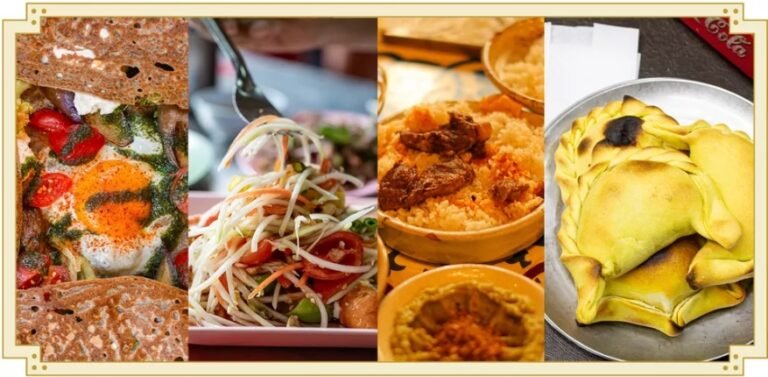
Whether you’re planning your next big trip, reminiscing about one you wish had lasted longer, or simply cooking your way through the flavors of cities still waiting to be crossed off your bucket list, Global Eats is here to spark inspiration. You’ll find more than 50 must-try recipes and over 50 dining destinations—meticulously curated and joyfully devoured—in seven global food cities: Bangkok, Buenos Aires, Cairo, London, Mumbai, Paris, and Taipei.

Let’s dig in.


Bangkok: A Feast of Flavor and Fire

If Bangkok had a national soundtrack, it would be the crackle of oil hitting a wok, the clang of metal ladles against bubbling pots, and the rhythmic chatter of sidewalk diners perched on plastic stools. In the Thai capital, food is everywhere—and thank goodness, because it’s impossible to eat just one dish.

In our Bangkok guide, you’ll meet the noodle shops serving boat noodles rich with beefy depth, the street vendors whipping up green papaya salad with enough chilies to make you cry (in a good way), and the kitchens layering flavor upon flavor into perfect curries. Whether you’re into sizzling satay skewers, tangy dipping sauces, or sweet, creamy mango sticky rice, Bangkok will make you a believer in eating five meals a day.

Even better? Most of it costs less than your morning coffee.


Buenos Aires: The City Where the Butcher Reigns

Argentinian cuisine is more than just beef—but let’s not kid ourselves, the beef is spectacular. In Buenos Aires, meat isn’t just an ingredient; it’s a cultural cornerstone. Our guide takes you into the heart of this carnivore’s paradise, where butchers still wield their knives with old-world artistry and empanadas come in enough regional varieties to start friendly debates.

You’ll also find rich stews, milanesa sandwiches, and the humble-yet-revered fugazzeta, a gloriously cheesy stuffed pizza that’s uniquely Porteño. Between sips of yerba mate and bites of dulce de leche-laced pastries, you’ll start to understand how deeply food and identity intertwine here.


Cairo: Layered History, Layered Dishes

Cairo doesn’t whisper its history—it shouts it in spice and texture. Our culinary tour of Egypt’s capital explores the intersection of ancient tradition and modern hunger, from bubbling pots of ful medames to crisp-fried ta’ameya (Egyptian falafel) and rice-stuffed pigeons fit for a pharaoh.

Food in Cairo is built for sharing, and so is this guide. With every flatbread torn and every spoonful of kushari (Egypt’s unofficial national dish), you taste the richness of a place that’s long welcomed—and fed—travelers with open arms.


London: A New Classic Emerges

Forget the tired clichés. London’s food scene today is a kaleidoscope of cultures, a city where you can have Jamaican curry goat for breakfast, Bangladeshi biryani for lunch, and a Michelin-starred reinterpretation of a Sunday roast for dinner.

In our London guide, we trace the evolution of a city that has fully embraced its global palate while holding tight to beloved traditions. Think handmade Cornish pasties next door to Persian tahdig, or afternoon tea with a twist. It’s all here—and it’s never been more delicious.


Mumbai: Spices, Street Food, and Soul

Mumbai doesn’t stop. Its food scene doesn’t either. From dawn to well past midnight, the city feeds millions with an astounding range of dishes—each layered with the energy of a place constantly on the move.

In this guide, we follow the aromas of pav bhaji sizzling on street-side griddles, the swirl of masala in steaming cups of chai, and the careful dance of spice and sweetness in regional thalis. Mumbai food is a wild, wonderful balance of chaos and comfort. You’ll leave full—and dreaming of your next bite.


Taipei: Where Tea and Technique Rule

In Taipei, food is precision. It’s ceremony. It’s also fun and totally unpretentious. From the hum of night markets to the quiet concentration of a gongfu tea house, this guide leads you through the heart of a city that takes its flavors seriously—and its snacks even more so.

We spotlight spots for perfect soup dumplings, the creamiest soy milk breakfasts, and tea shops where every pour tells a story. Taipei doesn’t demand attention—it earns it, one perfectly seasoned mouthful at a time.


Paris: Beyond the Croissant

Yes, the croissants are flaky perfection. But Paris is also reinventing itself, plate by plate. In our Paris guide, we dive into the new wave of chefs bringing global flavors to the city of lights—without losing sight of its storied culinary roots.

From tiny bistros serving Syrian-French fusion to markets hawking fresh oysters and perfect baguettes, we share the best of old and new Paris. You’ll also find recipes to bring that bistro energy home, no beret required.


So whether you’re holding a plane ticket or a wooden spoon, Global Eats is your invitation to explore. Come hungry, stay curious, and eat like you’re there—even if you’re not.

The Soul of Puerto Rico Is on the Plate

In Puerto Rico, food is never just food. It’s history, resistance, joy, and community—all served up in every bite. From roadside kiosks sizzling with frituras to ice cream shops scooping tropical flavors into charcoal cones, eating in Puerto Rico is more than nourishment. It’s a declaration: We are still here, and we are thriving.

Despite hurricanes, blackouts, debt crises, and political struggles that test the resilience of its people daily, the island’s culinary spirit remains remarkably unshaken. In fact, it seems to shine even brighter. As cookbook author Reina Gascón-López puts it, “There’s no better smell than sofrito hitting hot oil in a pan. The minute you smell it, you know—dinner’s going to be good.”

A Flavor Forged in Fire and Memory

To understand Puerto Rican cuisine is to begin with sofrito—the aromatic backbone of nearly every beloved dish on the island. Sofrito isn’t just a flavor base; it’s an heirloom. Made with onions, garlic, ají dulce, peppers, cilantro, and culantro, it’s often pounded by hand in a pilón (mortar and pestle) that carries generations of stories in its grain.

For Gascón-López, the scent of sofrito is inseparable from her grandmother’s kitchen. “My most cherished possession is one that belonged to my grandmother and great-grandmother and still smells of garlic in the wood,” she says. It’s not nostalgia. It’s preservation. It’s culture passed down in the most intimate way: through flavor.

The Roots That Feed the Island

Puerto Rican cuisine is inherently mestizo—a mix shaped by its Indigenous Taíno roots, Spanish colonizers, African heritage, and, more recently, a deep connection with the U.S. mainland. Dishes like mofongo, pastelón, and arroz con gandules are as much a reflection of the island’s complex history as they are of the ingredients themselves.

Chef and entrepreneur Manolo López, who was raised on the island and now lives in New York City, sees this culinary blend as a source of pride. “Our food tells our story,” he says. “The story of who we are, where we came from, and how we’ve adapted.”

San Juan: Where Tradition Meets the Next Wave

San Juan is more than Puerto Rico’s capital—it’s the beating heart of its food scene. The city is a living, breathing blend of old-school institutions and daring new ventures that reflect the changing face of Boricua cuisine.

For first-timers, López and Gascón-López both recommend starting with the classics. Mofongo—green plantains fried, mashed with garlic, and often served with a savory broth or meat—is a must. Lechón, the island’s famously juicy roast pork, is another essential. Then there’s arroz con gandules, a spiced rice dish packed with pigeon peas and pork, and always anchored by sofrito.

But Puerto Rican cuisine isn’t stuck in the past. In and around San Juan, chefs are experimenting with heritage and pushing boundaries. Think vegan interpretations of abuela’s recipes, or local seafood paired with modern wine lists and globally influenced techniques. The soul stays the same; the expression evolves.

Diaspora on the Plate

The story of Puerto Rican food doesn’t end on the island. The diaspora—particularly in cities like New York and Philadelphia—has shaped and reimagined Puerto Rican cooking, sending ideas, flavors, and cultural pride in both directions.

López himself is part of that story. From running food pop-ups to developing Puerto Rican-inspired menus in New York, he’s one of many who keeps the culinary dialogue between the island and the mainland alive. The result is a fluid, ever-growing definition of what Puerto Rican food can be.

It’s not just about recreating the classics—it’s about reinterpreting them without losing the emotion behind them. It’s to take a childhood memory and fold it into something new, without forgetting where it came from.

Food as Joy, Resistance, and Revival

What makes Puerto Rican cuisine extraordinary isn’t just its flavors, though those are undeniably bold, complex, and craveable. It’s the defiant joy baked into every meal. It’s the way a simple bowl of sancocho can feel like home, even after a storm has knocked the power out for days. It’s the way families gather, no matter what, to fry bacalaítos or stuff pastelillos with picadillo.

In Puerto Rico, cooking is an act of celebration, but also of survival. With every sofrito-scented dish, the island asserts its identity, its resilience, and its love.

Whether you’re eating soursop ice cream in a charcoal cone beneath the Puerto Rican flag or savoring a piping-hot pastel in your cousin’s backyard, one thing is clear: Puerto Rican food doesn’t just fill your belly—it fills your soul.

And in that, Puerto Rico feeds the world.

Friday Night Meatballs: The Ritual That Feeds More Than Hunger

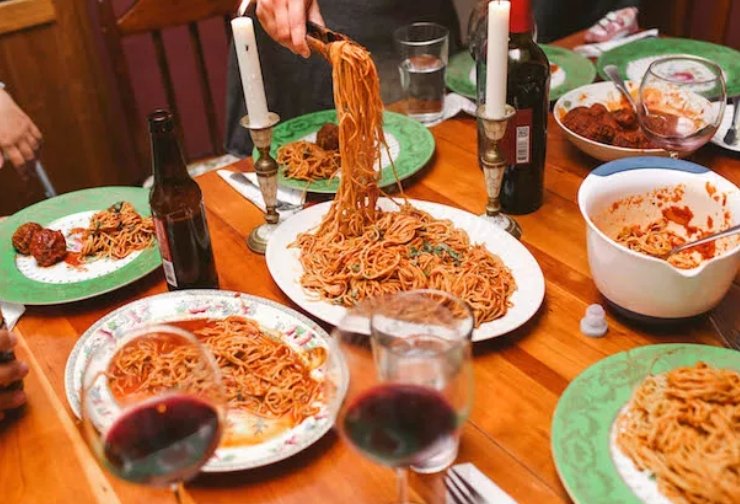
I light the candles. It’s a simple act, but it signals everything. The chaos of the week is behind us, the toys are tucked into corners, the dishes are stacked and waiting, and the wine is poured. The table—dressed in my great-grandmother’s delicate china and Lucia’s proudly folded napkins—stands ready for what it was always meant for: people. Stories. Togetherness.

Friday night in our Philadelphia rowhouse doesn’t come with fanfare or RSVP codes. There’s no formal dress, no pressure, and certainly no Pinterest-worthy spreads (unless you count a kid’s version of a centerpiece made from paperclips and Play-Doh). But what it does come with is something even better: a shared meal that opens our door to the community outside it.

It began as a modest experiment—an idea to gather, once a week, without overthinking it. We were busy, like everyone else. Too busy, in fact. Too often, we let whole months slip by without sitting across from the people we cared about. So, instead of waiting for the “right” moment or the perfect weekend when no one had a birthday party or work trip or flu bug, we just picked Friday. Every Friday. And we made meatballs.

A Meal With Intent

There’s something incredibly grounding about a ritual that’s as humble as pasta and red sauce. It’s not a dinner party—it’s not even a dinner invitation, really. It’s just what we do. The door is open, the water’s boiling, and whoever walks in gets a seat and a bowl.

The beauty of it lies in its simplicity. There’s no menu planning beyond the staples: Joe’s rich tomato sauce, meatballs that simmer low and slow until they’re tender enough to spoon apart, a loaf of good bread, a drizzle of olive oil, and maybe—if someone brings it—a salad or dessert. There’s usually grated Parmesan, too, though once we ran out and nobody noticed.

Guests know not to show up hungry for novelty. They come for comfort, for conversation, for the sheer joy of being welcomed just as they are.

From “What Are You Doing Friday?” to “See You Then”

It didn’t take long for Friday Night Meatballs to become more than a tradition. It became a kind of lifeline. Over the months, the gathering grew organically. Friends brought their partners, who brought their kids. Neighbors became regulars. Colleagues turned into close friends. Babies were passed around, advice was given, birthdays casually acknowledged with a cupcake and a candle.

At some point, it stopped being about the meatballs.

It was about making space—not just around the table, but in our lives. Space for conversation, for laughter that comes too loud after a second glass of wine, for kids dragging dollhouses into the living room, for teenagers quietly joining in the cleanup while pretending not to listen to adult talk. It became about showing up, not perfectly, but fully.

A Rejection of Perfection, A Celebration of Presence

It’s funny how often we assume hospitality has to be polished. That to invite people into our homes, everything must be tidy, curated, Instagram-worthy. But Friday Night Meatballs lives outside that box. Sometimes there’s a laundry basket shoved into the coat closet. Sometimes dinner runs late or the sauce is a bit too garlicky. And guess what? Nobody cares.

That kind of casual, come-as-you-are generosity is what makes it all work. It’s not about entertaining—it’s about gathering. It’s not about impressing—it’s about including.

And over time, we’ve noticed something beautiful: our guests bring their own versions of that spirit with them. A friend might show up with a pot of lentils instead of wine. Someone else brings their brother who’s in town for the weekend. Another swings by after a hard week just to sit and listen. The table, in its own quiet way, has made room for all of it.

The Dinner That Anchors the Week

These days, our calendar orbits around Friday. Not in a stressful, plan-the-party kind of way, but in an anchoring way. No matter what the rest of the week looks like—school runs, deadlines, dirty dishes—there’s a moment waiting for us on Friday evening when we pause, we light the candles, and we gather.

My daughter now thinks of “meatball night” as a given. She doesn’t know a life without it. And maybe that’s the best part: that our kids are growing up thinking it’s completely normal to open your door, feed your friends, and spend a couple of hours connecting over something warm and delicious.

What Matters Most

When the table fills up, when the glasses clink and the napkins are stained with red sauce and the kids sneak cookies under the table, I look around and think: this is it. This is what we work for, clean for, cook for. Not to dazzle or impress, but to hold space for each other in a world that doesn’t always make that easy.

And when we lift our glasses—some filled with wine, others with juice or water—and someone says it, like a benediction:
“To Friday Night Meatballs!”
—well, we all smile, because we know exactly what it means.

The Case for Room-Temperature Meals: A Quiet Culinary Revelation

Eat it before it gets cold!” How many times did you hear that growing up? It was a universal kitchen chorus—uttered by sitcom moms, real moms, and dads too, as they ushered piping-hot plates to the table. Warm food, we were told, was the gold standard. If your dinner wasn’t steaming, something had gone wrong.

But here’s the thing: now that I’m the one behind the stove, juggling skillets and timers, I’ve come to a quiet but radical conclusion—hot isn’t always better. In fact, in many cases, lukewarm (or let’s say it—room-temperature) is actually the sweet spot.

Don’t get me wrong, I still appreciate the cozy comfort of a bubbling lasagna or a bowl of soup that makes you fog up your glasses. But more often than not, I find myself sneaking bites from the pan after things have cooled, and realizing: wait, this actually tastes better.

Room-Temperature Isn’t Tepid, It’s Balanced

Let’s start with a rebrand. “Room-temperature” sounds clinical. It’s the language of weather reports and baking instructions. But in the culinary world, it can mean something else entirely: balanced flavor, relaxed textures, and dishes that aren’t shouting at your palate but speaking to it gently.

When food cools down a little, it has time to settle. Excess steam dissipates, sauces thicken, and seasoning levels stabilize. The heat that might have overwhelmed certain flavors now steps back, letting subtler notes emerge. Think of a spicy curry—at full heat, the chili might be the only thing you taste. Give it ten minutes? Suddenly the coconut, the cardamom, the citrus, they all get a chance to shine.

This isn’t just a quirky preference—it’s something chefs and experienced home cooks know instinctively. Taste your food straight from the stove and again after it rests. The difference is often remarkable.

Tapas, Meze, and Antipasti: The Originals

If you think room-temp dining is some kind of modern shortcut, think again. Plenty of the world’s greatest food traditions have built entire meals around this idea. Spain’s tapas, Italy’s antipasti, and the endlessly generous spreads of Middle Eastern meze—none of them come sizzling. And that’s by design.

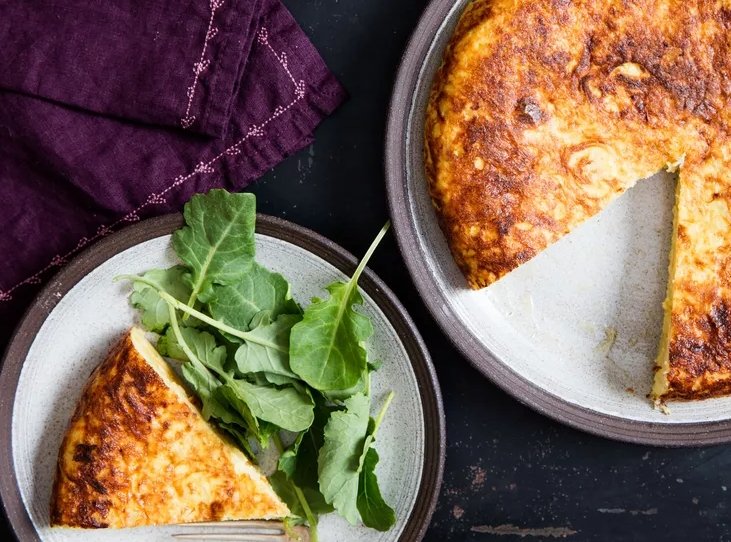
These dishes are meant to be grazed on. They’re forgiving and flexible. A slice of tortilla española, some roasted peppers slicked with oil, hummus, baba ganoush, olives, cured meats—none of these suffer from a little time away from the stove. If anything, they improve with it. Their flavors deepen, their textures soften just enough, and they lend themselves to conversation rather than a frenzied fork battle.

The Accidental Room-Temp Meal

Even in everyday home cooking, some of our best bites happen by accident—standing over the sink, picking at the leftovers before they get packed up. That roast chicken you made? Better the next day, once the fat has solidified a bit and the seasoning has settled into the skin. Pasta salad? Wouldn’t dream of eating it hot. Quiche? Arguably at its peak once it’s fully set and cool. A slice of pizza? Cold has its die-hard fans, but room-temp might be the ultimate middle ground.

And let’s not forget about dishes that are intended to be served at this temperature from the start—grain salads, roasted veggie platters, noodle dishes like soba or sesame udon. Their components aren’t battling for attention; they’re collaborating. Room-temp lets that happen.

Heat Has Its Place—But So Does Restraint

Of course, there are times when hot is king. A grilled cheese needs to ooze, a steak benefits from that seared-sizzle-to-juicy-center contrast, and hot soup on a cold day can feel like a hug in a bowl. But not everything requires that level of thermal drama. In fact, trying to keep every component of a meal screaming-hot can be exhausting—and often, unnecessary.

Once you let go of that pressure, cooking becomes more relaxed, and serving becomes more forgiving. Dishes don’t need to be timed down to the second. You don’t have to be a short-order cook, plating like a maniac to make sure nothing cools before it hits the table.

Embracing the Temperature Spectrum

So here’s the gentle push: rethink your temperature expectations. Not every dish needs to burn your tongue to be considered “done.” Let your meals linger a little. Give your food the same grace period you give yourself when transitioning from the frantic pace of prep to the pleasure of eating.

And if someone tells you your dinner’s gone cold, just smile and say, “It’s meant to be like this.”

Because sometimes, the best bite isn’t the hottest—it’s the most patient.

Behind the Kitchen Curtain: The Unsung Heroes of Serious Eats Recipe Testing

If you’ve ever followed a Serious Eats recipe and marveled at how well it turned out—how that roast chicken was as crisp as promised, or how your cookies didn’t mysteriously spread into flat discs—it’s not just luck. It’s the result of serious behind-the-scenes work from a group of people you likely haven’t heard of: the cross-testers.

Serious Eats has come a long way since its scrappy blog days in 2006, when posts often went up with minimal editing and even less testing. Back then, it was the Wild West of online food media—less polished, more passionate, and with the occasional culinary misfire. Today, things look a little different. Every new recipe is tested, then cross-tested by someone else. Old favorites are revisited and reworked. Some recipes are retired. Some get reborn. All of it is done with one goal in mind: making sure the food that comes out of your kitchen is as good as what came out of ours.

It’s meticulous work. Often invisible. But it’s the beating heart of what keeps Serious Eats, well, serious about cooking.

Why Cross-Testing Matters

Recipe cross-testing is like the quality control of the culinary world. It means a second (or third, or fourth) set of hands replicating a dish in a totally different kitchen, often with different brands of ingredients, different altitudes, even different pans. If a recipe can survive all of that and still shine, then it’s ready for your kitchen.

This matters more than most readers realize. A dish might turn out perfectly in a test kitchen where the team knows the exact quirks of their oven and the precise sharpness of their knives. But what happens when a home cook—maybe new to the technique, maybe juggling a toddler on one hip—tries to make the same dish? Cross-testers help make sure it still works.

They’re the ones flagging confusing instructions, recommending temperature adjustments, and making sure your cookies actually bake in the time listed. They ask the tough questions: What if someone uses a different brand of soy sauce? Will this dough still rise in a colder kitchen? Can we scale this for four or for forty? These are the kinds of invisible edits that separate a decent recipe from a great one.

A Team You’ve Never Met—But You’ve Definitely Tasted

The Serious Eats culinary team is headquartered in Birmingham, Alabama, but the network of trusted freelance cross-testers stretches far beyond. These are cooks with sharp palates and even sharper attention to detail—people who care just as much about the texture of your rice pudding as they do about the grammar in the headnote.

And they’re not just working on the shiny new releases. A huge part of their job is combing through the existing archive—hundreds of recipes that span nearly two decades—and making sure they still hold up. Some classics get a small tweak; others are completely reworked from the ground up. The commitment is relentless and ongoing.

And yet, it’s rarely the work you see. It happens off-camera, without fanfare. The ingredient swaps, the side-by-side comparisons, the third round of testing to get that caramel sauce just right—they’re all done so that you never have to think about them. You just get to enjoy the results.

The Recipes They Loved Most in 2023

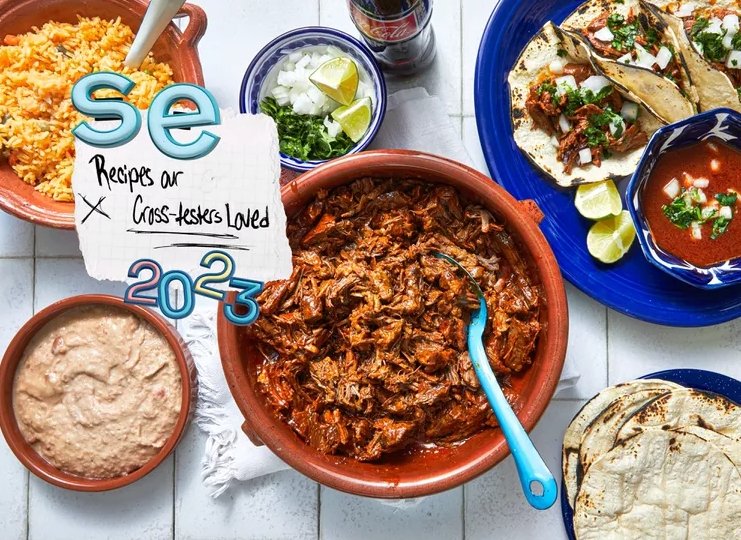
Every now and then, though, the cross-testers get to gush a little. In 2023, they cooked and re-cooked a mountain of Serious Eats dishes—and a few stood out as favorites. Some were brand-new additions to the site; others were beloved old-timers given a new lease on life.

From perfectly chewy chocolate chip cookies to crisp-skinned chicken thighs, from deeply savory mushroom risottos to flawless homemade dumplings, these are the recipes that brought joy not just to readers, but to the people fine-tuning them behind the curtain.

Their notes helped shape better instructions. Their experiments with timing, heat, and hydration levels saved you from potential culinary heartbreak. And their taste tests? They ensured every dish wasn’t just passable—it was delicious.

The Work Never Ends (and That’s a Good Thing)

The internet changes. Algorithms shift. Tastes evolve. But one thing remains constant at Serious Eats: the relentless commitment to good food that works.

That’s why cross-testing isn’t just a phase or a trend—it’s baked into the culture. Every week, someone’s frying, roasting, baking, or fermenting to make sure the next recipe you read will meet the mark. And while that work often happens quietly in the background, it deserves its moment in the spotlight.

So the next time you whip up a perfect batch of gnocchi or master the art of braising short ribs, remember the hands you never saw—the testers who made sure your dinner didn’t just work, but wowed.

Here’s to the cross-testers, the recipe whisperers, and the unsung stewards of culinary accuracy. They may be behind the scenes, but their impact is front and center—on every plate.

The Eternal Caesar: A Salad That Grew Up With Us

Long before “girl dinner” became the internet’s shorthand for a hodgepodge of olives, cheese, and vibes, there was the Caesar salad—my original comfort meal in disguise. Back in high school, when a coveted off-campus lunch pass felt like a golden ticket, my friends and I would pile into someone’s hand-me-down car and head straight to Brighams’, our suburban Massachusetts haven. There, we’d order the usual: frosty black-and-white milkshakes, a round of Diet Cokes, a shared basket of fries and onion rings, and—most sacred of all—towering Caesar salads. Cold, crisp, creamy, garlicky, and showered in shaved Parmesan, they were our not-so-subtle initiation into adulthood. Light enough to feel classy, but rich enough to feel like a splurge, it was the dish that made us feel like women-in-the-making.

Looking back, we didn’t know much about the salad’s roots or its cultural clout. What we did know? Caesar salad never missed.

The Taste That Keeps on Winning

It’s almost too easy to overlook the Caesar salad these days. It’s everywhere—from steakhouses to airport kiosks, from school cafeterias to upscale wine bars. With its seemingly bulletproof combination of crunchy romaine, sharp Parmesan, garlicky croutons, and that silky umami bomb of a dressing, it’s hard to imagine a world where the Caesar isn’t a go-to. But behind that staying power lies a remarkable story of migration, invention, and adaptability—one that mirrors the shape-shifting nature of American cuisine itself.

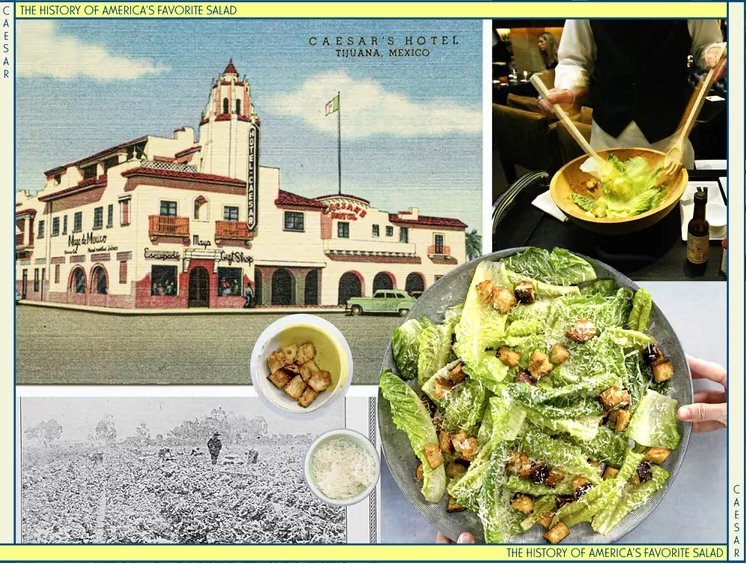
The Caesar isn’t some ancient Roman relic, despite the imperial name. It’s an immigrant success story, born not in Italy, but in 1920s Tijuana. Italian brothers Cesare (or “Caesar”) and Alessandro Cardini, who had been living and cooking in California, moved south to Mexico during Prohibition, opening restaurants just across the border. Their timing was impeccable. While Americans were legally dry at home, they flocked to Tijuana for cocktails, casinos, and the novelty of a sophisticated night out. Enter: the Caesar salad.

Accounts vary slightly, but the generally accepted origin story goes like this—on a particularly busy Fourth of July weekend, Caesar Cardini found himself running low on supplies. Ever the showman, he improvised a tableside salad using what he had: romaine lettuce, raw egg, lemon juice, Worcestershire sauce, garlic, olive oil, and Parmesan. He tossed it in front of diners with a theatrical flair, and just like that, a legend was born.

The Everyman’s Fancy Salad

For all its swank beginnings, the Caesar quickly became the people’s salad. Maybe it’s because its appeal is so instinctive. There’s that crunchy-soft balance, the richness of the dressing balanced by the watery snap of romaine, the deeply savory backbone of anchovy (whether declared or smuggled in via Worcestershire), and the always-welcome crunch of croutons. It’s indulgent without being heavy. Accessible, yet sophisticated.

But perhaps the real genius of the Caesar lies in how gracefully it’s evolved. It’s endlessly riffable. Chefs can add grilled chicken, seared shrimp, or crispy tofu without disrupting its DNA. They can swap romaine for kale, watercress, or little gems. They can deconstruct it, reconstruct it, and foam it if they must. Even a vegetarian Caesar—anchovy-free but packed with miso or nutritional yeast—still captures the spirit of the original.

And while the dressing might seem fussy, it’s been endlessly democratized—from blender versions to bottled ones, from mayo-based shortcuts to anchovy-packed purist takes. No matter the variation, Caesar remains a safe harbor for the American palate. It’s the kind of dish that can ease people into bolder flavors: raw egg, anchovy, the funk of real Parmesan. It flirts with complexity without ever being pretentious.

A Salad That Grew With Us

What makes the Caesar salad special isn’t just its history—it’s how deeply it’s embedded itself into our cultural memory. For me, it was the gateway salad—the first one that didn’t feel like a pile of health food, the one that felt grown-up. It’s a dish many of us graduated to as kids, when we were ready to move beyond ranch dressing and iceberg lettuce but not quite ready for frisée and fig vinaigrette.

That emotional tie is powerful. Whether eaten in a white-tablecloth restaurant or with plastic cutlery in a takeout container, a Caesar can still feel like an event. It has the reliability of a best friend and the flexibility of a trendsetter. It adapts to the moment, but it never loses its essence.

The Future Is Still Caesar

In a world of fleeting food fads and TikTok recipes that disappear as fast as they arrive, the Caesar stands tall. It’s survived nearly a century of changing tastes, dietary trends, and even geographical displacement. It started in a prohibition-era border town and ended up as a staple in everything from wedding banquets to Wednesday night dinners. That kind of staying power isn’t just nostalgia—it’s proof that some flavors are timeless.

So here’s to the Caesar salad—an enduring classic, a canvas for creativity, and, for some of us, the first dish that made us feel like we belonged in the adult world of ordering for ourselves. It may not have been born in Rome, but it sure made a conquest of our hearts.