


colibr.org | Page 6
Home Blog Page 6

Braciole: A Tender Tradition Wrapped in Flavor and Memory

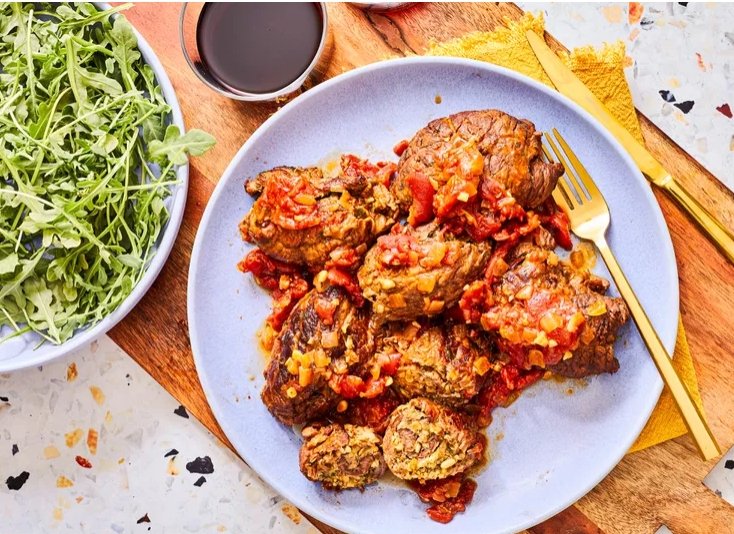
At first glance, braciole might seem like a simple dish—just meat rolled up with some stuffing and simmered in sauce. But like so many Italian staples, it’s anything but simple. At its heart, braciole belongs to a family of dishes known as involtini—thin slices of meat filled, rolled, and cooked to tender perfection. But beyond that basic structure, braciole becomes a canvas for regional flair, family tradition, and personal taste.

Depending on where you are in Italy—or whose kitchen you find yourself in—braciole can take on entirely different forms. The cut of meat might be pork or beef, the rolls small enough for individual servings or large enough to carve at the table. Fillings range from seasoned breadcrumbs to generous chunks of cheese, ribbons of prosciutto, or fragrant sprigs of fresh herbs. Some cooks pan-fry the rolls to get a good sear, while others go straight to braising, letting time and tomato sauce do the work.

The version I’m sharing here is deeply rooted in the Italian-American experience, shaped by the comforting, communal meals I grew up with in New Jersey. It pulls inspiration from the traditional ragù napoletano, a rich tomato-based sauce that simmers with meat for hours. In that tradition, the meat and the sauce are served separately—the sauce tossed with pasta, the meat sliced and plated on the side, tender enough to fall apart with a fork.

My braciole starts with thinly sliced beef, generously seasoned and layered with a breadcrumb mixture that’s laced with Parmesan, garlic, and herbs. A single, delicate layer of prosciutto adds a touch of salt and depth. Rolled tightly, each bundle is tied off and nestled into a pot of simmering tomato sauce, where it cooks low and slow until every bite is rich and tender. It’s the kind of meal that fills your kitchen with the aroma of home and tradition—and makes everyone slow down at the table.

The Great Beef Debate: Flank vs. Top Round

One of the most passionately debated topics in braciole-making—at least among Italian-Americans—is the cut of beef to use. It’s a culinary crossroads with two main paths: flank steak or top round.

Flank steak, with its broad surface and bold grain, is ideal for creating a large, single roulade. After butterflying and pounding it thin, the filling is spread across the whole slab. Rolled into one impressive roast, it’s braised as a whole, then sliced into rounds for serving. This method not only creates an eye-catching centerpiece but also allows for beautiful spiral cross-sections that show off the layers of meat and filling.

Top round, on the other hand, is often sliced thinner and used for individual braciole—small, single-serving rolls that can be tucked neatly into the pot alongside each other. This version is perfect for portioning and serving, especially in family-style meals where everyone gets their own roll. It’s less dramatic than the whole-roast method, but it’s every bit as satisfying.

Whichever path you choose, the essence of braciole remains the same: good ingredients, slow cooking, and lots of love.

A Dish Worthy of Sunday Supper

Braciole isn’t a quick weekday dinner. It’s a dish that asks for a little time and a little patience—and it gives back in spades. As the meat simmers, the sauce deepens and sweetens, soaking up the flavor of the beef and the cured meat tucked inside. It’s the kind of food that brings people together around the table, that pairs perfectly with a crusty loaf of bread and a glass of red wine, and that somehow tastes even better the next day.

For many Italian-American families, this is Sunday fare—something special, something a little more indulgent, something that reminds you of where you come from. It’s a nod to ancestry, a connection to generations before, and a reminder that food is never just about eating. It’s about remembering, sharing, and creating something lasting.

So whether you’re team flank steak or top round, individual rolls or grand roast, braciole is more than a recipe. It’s tradition wrapped up in meat and tied with string. And when it’s done right, it’s a meal you won’t soon forget.
Skillet Brownies Meet the Grill: A Smoky Twist on a Classic Favorite

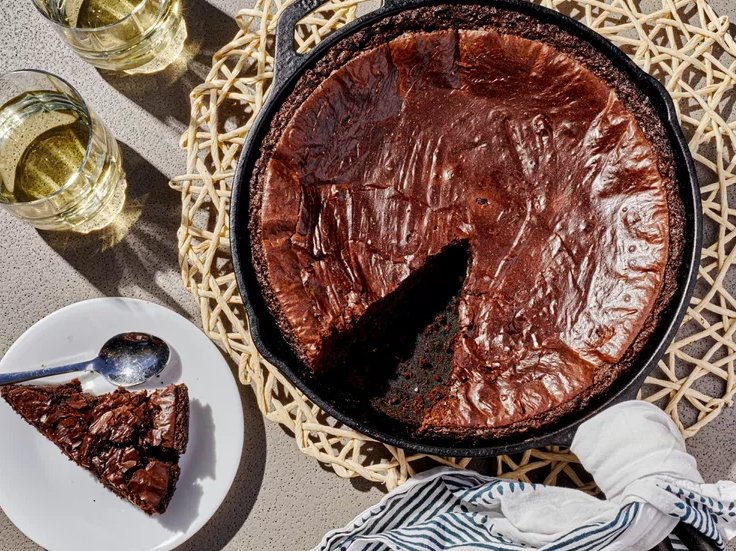
There’s something universally comforting about a simple brownie—rich, chocolaty, and endlessly satisfying. But what if we could take that familiar square of goodness and push it just a little further? What if a brownie could hold the spirit of a campfire, with whispers of smoke and hints of heat playing off its deep, dark chocolate soul?

Enter the grilled skillet brownie—a reinvented take on a beloved dessert that goes far beyond the oven. This isn’t just about baking outside; it’s about transforming the brownie into something earthy, complex, and unexpectedly bold.


Brownies with a Side of Smoke

Grilling isn’t typically where we turn for desserts, but it should be. When you introduce fire to chocolate, magic happens. On the grill, a brownie becomes something entirely new—smoke dances into the batter, adding depth and nuance to the flavor. It’s no longer just sweet; it’s layered. And when you pair that natural smokiness with dark chocolate’s bittersweet richness and a whisper of ancho chile? That’s where the real alchemy begins.

Ancho chile doesn’t scream for attention—it hums quietly in the background, warming up the bite just enough to make it memorable. Its subtle heat enhances the chocolate’s earthiness without overwhelming the palate. The result is a brownie that feels familiar but tastes entirely fresh.


Cast Iron: The Unsung Hero

A key part of this grilled brownie’s success comes down to one essential tool: the cast iron skillet. There’s a reason generations have trusted cast iron—it’s reliable, durable, and retains heat like a dream. But on the grill, it’s not just practical—it’s transformative.

Placed over indirect heat, the skillet acts as a buffer, protecting the brownie batter from harsh flames while still absorbing the warmth necessary to create perfectly textured edges and a gloriously gooey center. The surface crisps just enough to deliver that lightly chewy bite we all love, while the inside stays fudgy and rich.

And then there’s the char. That gentle kiss of smoke on the outer edge? It’s thanks to both the skillet and the grill. The result: every wedge you slice delivers a satisfying contrast of textures and flavors—smoky, crispy, soft, and melty, all at once.


Wood-Smoke Elevation

To take things a step further, adding smoldering wood to the grill is the secret weapon. It turns your basic gas or charcoal grill into a flavor generator. As the brownie bakes low and slow, the wood infuses the batter with aromatic smoke, penetrating each bite with a rustic character you can’t replicate in a traditional oven.

Hickory or cherry wood both work beautifully here—cherry adds a subtle sweetness, while hickory leans into the deep, smoky vibe. Just a handful of wood chips can make the difference between “this is good” and “wow, what is this?”


Dessert Reimagined

What makes this grilled skillet brownie so special isn’t just the ingredients—it’s the experience. Baking outdoors brings a kind of elemental joy to cooking, especially when it’s a sweet ending to a meal that might’ve started with grilled steaks or veggie skewers. The process invites you to slow down, to let the fire do its work while you watch the sun dip behind the trees. It’s rustic, yet refined. Familiar, yet new.

This brownie isn’t just dessert—it’s a conversation piece, a memory maker. It tastes like summer evenings, backyard dinners, and a little bit of culinary adventure. It’s a dessert that embraces contrast: smoke and sweetness, crisp and soft, bold and comforting.


Final Thoughts

Brownies have long been a staple in the dessert world, beloved for their simplicity and decadence. But this grilled version proves they’re also a perfect canvas for experimentation. With just a few thoughtful tweaks—a cast iron skillet, a bit of smoke, and the warmth of ancho chile—you can take the classic to a whole new place.

So next time you’re firing up the grill, don’t stop at the main course. Slide a skillet over the flames, add your brownie batter, toss in some wood chips, and let the grill work its quiet magic. You’ll end up with something more than dessert. You’ll create a smoky, fudgy, unforgettable experience—one wedge at a time.